
Instagram API Alternative: Top 2026 Picks
You've probably seen this failure already. An integration that used to fetch a public Instagram profile now returns an error, a login flow only works for accounts you manage, or an app review request turns a small feature into an infrastructure project. Searching for an Instagram API alternative isn't really about finding one replacement endpoint anymore. It's about choosing the right API class for the job.
The practical split is straightforward. Owned-account publishing and analytics belong in Meta's official ecosystem. Public-data extraction, competitor monitoring, hashtag research, and social listening often require a third-party provider, with a different set of reliability, compliance, and maintenance trade-offs.
| Workflow | Most suitable API class | Main constraint |
|---|---|---|
| Publish to an account you manage | Instagram Graph API or Instagram API with Instagram Login | Business or Creator account requirements |
| Sign users into a consumer application | Instagram API with Instagram Login | Personal profiles aren't covered by the current replacement path |
| Manage direct messages | Instagram Messaging API | Narrow permissions and account eligibility |
| Research public profiles, posts, reels, comments, hashtags, or locations | Third-party public-data API | Provider compliance, freshness, and stability must be evaluated |
| Batch extraction for analysis | Scraping marketplace or structured data provider | Variable latency, maintenance, and usage costs |
| Multi-platform social data pipeline | Unified REST API | Coverage and normalized schemas vary by provider |
The right choice depends less on the phrase “Instagram API alternative” and more on whether your application owns the account, serves the account holder, or analyzes public content.
Table of Contents
- The End of Lightweight Instagram Data Access
- Navigating the Fragmented Official Meta Ecosystem
- Evaluating Third-Party Instagram API Alternatives
- Compliance and Stability in Public Data Extraction
- Matching API Classes to Specific Product Workflows
- Implementing a Unified Social Data Pipeline
- Scaling Social Infrastructure for 2026 and Beyond
The End of Lightweight Instagram Data Access
On December 4, 2024, Meta ended the Instagram Basic Display API. From that date, requests to the API returned an error, and developers were directed to migrate to the Instagram API with Instagram Login, as documented in Meta's shutdown announcement. Meta had announced the change on September 4, 2024, then gave partners a 90-day adjustment window.
That decision removed the lightweight route many applications used to retrieve basic Instagram data for personal accounts. A small app could no longer rely on the old pattern of letting a user authenticate and then reading profile or media data through Basic Display. Existing integrations needed more than a new endpoint. They needed a new account model, new permissions, and often a different product assumption.
What changed for existing applications
The important distinction is between public content and officially accessible content. A profile or post may be visible on Instagram to an ordinary visitor, but that doesn't mean Meta's official APIs make it available to your application. Visibility in the consumer product and eligibility through an API are separate questions.
The replacement route is narrower. Meta's current documentation describes the Instagram API with Instagram Login as a path for Business and Creator accounts, not personal accounts. That creates an immediate product problem for applications built around consumer profiles, casual sign-in, or broad public discovery.
Practical rule: Treat “public on Instagram” and “available through Meta's official API” as different data classifications.
The migration burden also extends beyond authentication. Teams must review permission scopes, update token handling, test account eligibility, and prepare for app review where the requested workflow requires it. A developer can replace an HTTP request in an afternoon, but replacing the surrounding authorization and data model can take much longer.
Why an alternative became an architecture decision
The shutdown affects more than social dashboards. AI teams may need public posts for retrieval or classification. Analysts may need competitor content, hashtag activity, or location-based discovery. Agencies may want to compare accounts that their clients don't own. Those workflows don't map cleanly to an official API designed around authorized business assets.
That's why third-party options now fall into distinct categories. Some provide a REST interface for public Instagram data. Others operate batch scrapers or preprocessed datasets. A separate group simplifies publishing and account management while still relying on Meta's approved access paths.
The wrong choice produces predictable failure modes. A team may adopt an official integration for a competitor-monitoring product, only to discover that the required accounts aren't eligible. Another may use a scraper for owned-account publishing, then inherit unnecessary operational and compliance risk. The first decision should be the data relationship, not the vendor name.
Navigating the Fragmented Official Meta Ecosystem
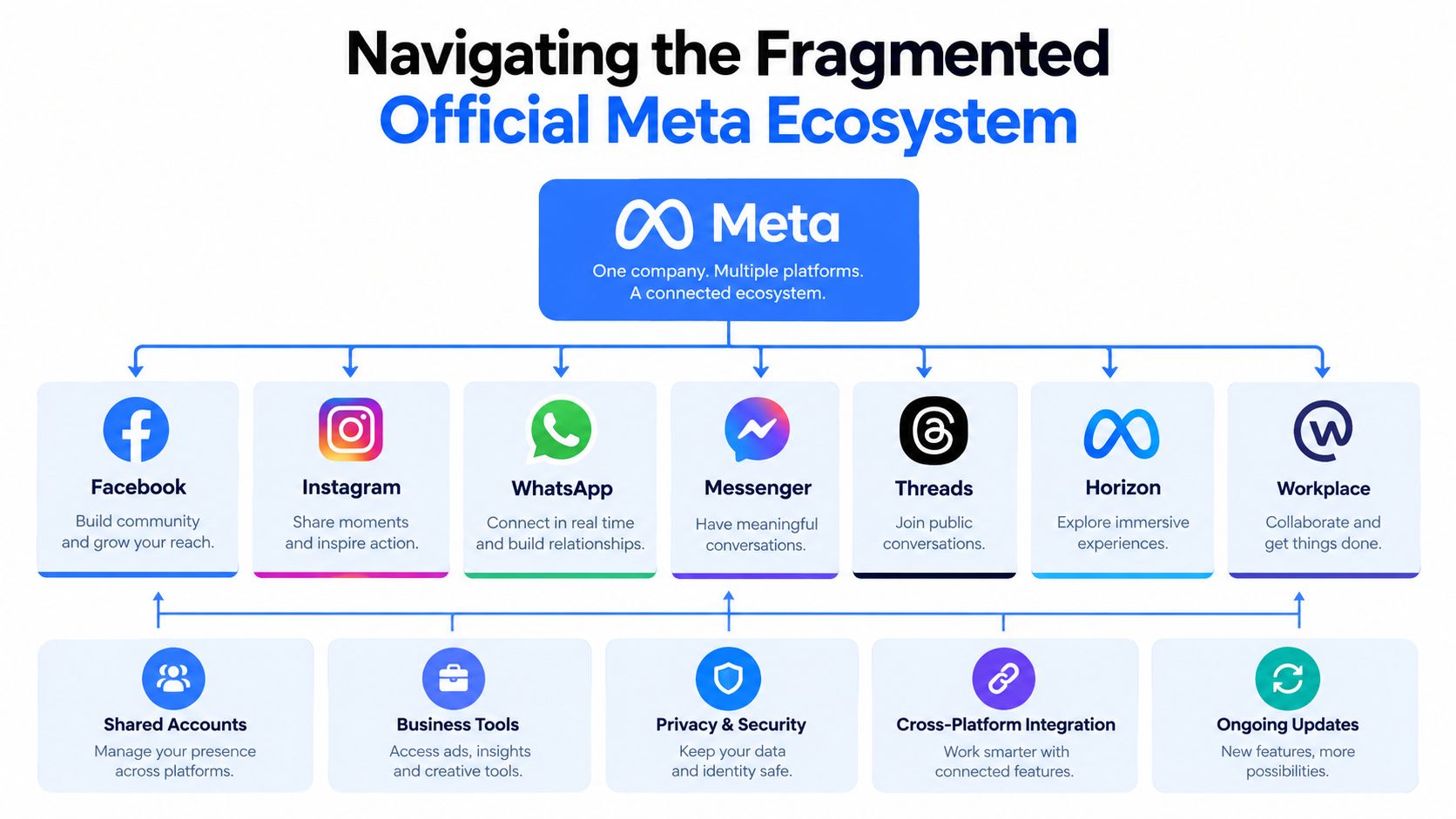
Meta's official Instagram offering is no longer one general-purpose API. It's a collection of API classes with different jobs, account requirements, permissions, and operational boundaries. Treating them as interchangeable is one of the fastest ways to design the wrong integration.
The three official paths
The Instagram Graph API is the natural fit for managing assets tied to a Business or Creator account. It supports account-owned workflows such as publishing, media management, and approved insights use cases. It isn't a general search API for discovering arbitrary public profiles or competitor content.
The Instagram API with Instagram Login provides a separate authentication path for eligible professional accounts. It addresses onboarding needs that don't fit older Facebook-centered flows, but it doesn't restore the personal-account access removed with Basic Display. Developers still need to request and maintain the permissions their features require. Meta's guidance, for example, identifies instagram_business_manage_insights as a permission needed for insights access in relevant workflows, as explained in Meta's guidance on user and media insights.
The Instagram Messaging API is a different class again. It serves messaging and inbox-related use cases, not general public-data research. A team building customer support automation shouldn't assume that a messaging permission also grants profile discovery, post search, or historical monitoring.
For a broader implementation reference, Captapi's Instagram API documentation illustrates the different public-data endpoint patterns that third-party providers expose.
Where the official stack fits, and where it doesn't
| Requirement | Official Meta stack | Practical result |
|---|---|---|
| Publish content for a managed professional account | Suitable | Build around account authorization and media requirements |
| Read approved insights for an eligible account | Suitable | Request the specific permission and pass required review |
| Let personal profiles use the old lightweight login model | Not suitable | Basic Display is no longer available |
| Search competitor profiles and posts broadly | Usually unsuitable | Look at third-party public-data options |
| Monitor hashtags across public content | Not a general-purpose fit | Choose a provider with explicit search coverage |
| Automate customer conversations | Potentially suitable | Use the Messaging API and its permitted account context |
The official route is still the right answer when your product manages a customer's own Instagram presence. It gives you a clearer relationship with Meta's policies and avoids building a data pipeline around extraction techniques that may change. The cost is onboarding complexity, narrower coverage, and ongoing attention to permission changes.
For competitor research, public discovery, or OSINT, the gap is functional rather than cosmetic. A tool may return public profiles, posts, reels, comments, hashtags, locations, or stories, while Meta's official account APIs remain centered on accounts that have explicitly authorized your application. Buyers should compare the actual fields and workflows, not just whether a vendor advertises “Instagram API access.”
Evaluating Third-Party Instagram API Alternatives
Third-party providers solve a different problem from Meta's official APIs. They may collect public data through extraction infrastructure, maintain indexed results, expose normalized JSON, or package several social networks behind one interface. That flexibility can remove OAuth and app-review friction, but it shifts responsibility toward provider quality, data rights, freshness, and failure handling.
Raw extraction versus unified interfaces
HikerAPI is positioned as a low-latency, pay-per-request REST API. It includes 100 free requests, then charges $0.0006 per request, according to the 2026 comparison of Instagram API alternatives. Its public-data coverage includes profiles, posts, reels, stories, followers, hashtags, and locations.
Apify's Instagram Scraper follows a different model. The same comparison describes pay-per-result pricing combined with compute units and a Starter plan from $29 per month. That structure can suit scheduled or batch-oriented extraction, especially when a team wants actor-style workflows, exports, and orchestration rather than a small request-response service.
| Feature | Raw Scraping Marketplaces | Unified REST APIs, such as Captapi |
|---|---|---|
| Primary model | Run configurable actors or scrapers | Call consistent endpoints |
| Best fit | Batch jobs and custom extraction | Product features and repeatable pipelines |
| Latency profile | Can vary by target, queue, and run | More predictable when cached or provider-managed |
| Schema | Depends on actor and output configuration | Usually normalized around provider endpoints |
| Maintenance | Your team monitors actor behavior and output changes | Provider abstracts more collection complexity |
| Multi-platform use | Often requires separate actors | One interface may cover several platforms |
| Cost shape | Compute, result, or run-based | Credits, request-based, or subscription-based |
| Main risk | Breakage, retries, and scraping operations | Coverage gaps and dependency on provider behavior |
A raw marketplace gives engineers more control, but control comes with maintenance. You need to decide how to handle pagination, retries, blocked requests, duplicate records, malformed output, and schema drift. A unified API reduces that work, though it may expose fewer niche fields or less control over collection tactics.
How to evaluate a provider technically
Start with endpoint coverage, not the landing page. Ask whether the provider can retrieve the exact object your application needs, such as a profile, reel, comments, hashtag results, or post details. Then test pagination and error semantics. A response that looks good for one profile is not evidence that the provider can support sustained monitoring.
Latency also needs a real definition. “Fast” might mean a cached response, a completed live extraction, or a queued job that eventually produces a dataset. Ask whether repeated reads are cached, how long cached data remains usable, and whether the API exposes a job status or retry state.
Security testing matters because a social data provider becomes part of your production attack surface. Teams reviewing tokens, webhook handlers, request validation, and tenant isolation can use these 2026 API pen testing best practices as a practical checklist.
A unified provider can be useful when the product also needs TikTok, YouTube, or Facebook data. You'll trade some platform-specific control for one authentication pattern, one error model, and a shared internal schema. Captapi's alternatives overview is one reference point for comparing that unified approach with narrower Instagram-only services.
Compliance and Stability in Public Data Extraction
Public-data extraction isn't automatically risk-free because a user can view the source page without logging in. The buyer still needs to understand how the provider collects data, what contractual restrictions apply, how the customer may store and republish results, and whether the intended use involves personal information or sensitive inference.
Separate access, use, and retention
For AI, OSINT, and social listening teams, the first control is purpose limitation. Collect only the fields needed for the product function. A public post URL and caption may support a monitoring workflow, while a full follower graph or persistent user-level history may create a much larger governance burden.
Retention deserves the same attention as collection. Define how long raw responses remain in storage, which fields are indexed, who can access them, and how deletion or correction requests are handled. Don't assume that a provider's access method answers those questions for your organization.
The second control is provenance. Store the provider, retrieval time, source identifier, and transformation history alongside each record. That makes it possible to explain where a record came from, identify stale data, and remove derived outputs when the underlying material should no longer be used.
Design for platform churn
Meta has changed permission names, retired legacy endpoints, and reorganized official access paths. A pipeline that hardcodes one platform's response shape will eventually force an expensive rewrite. Put a normalization layer between the provider and your application, then keep provider-specific fields available as optional extensions.
Stability also depends on operational behavior. Evaluate whether a provider offers retries, backoff, cache controls, structured error codes, and monitoring signals. A successful response today doesn't tell you how the system behaves when Instagram changes page structure or a source becomes temporarily unavailable.
A responsible vendor assessment should include a small production-like test. Run the same profile, post, search, and pagination requests over time. Compare field completeness, duplicate handling, stale results, and failure recovery before committing the provider to a customer-facing feature.
For policy and implementation considerations, this guide to social media compliance can help teams frame data handling responsibilities. The provider can supply access and infrastructure, but your organization still owns the decisions about lawful use, storage, user notices, and downstream model training.
Matching API Classes to Specific Product Workflows
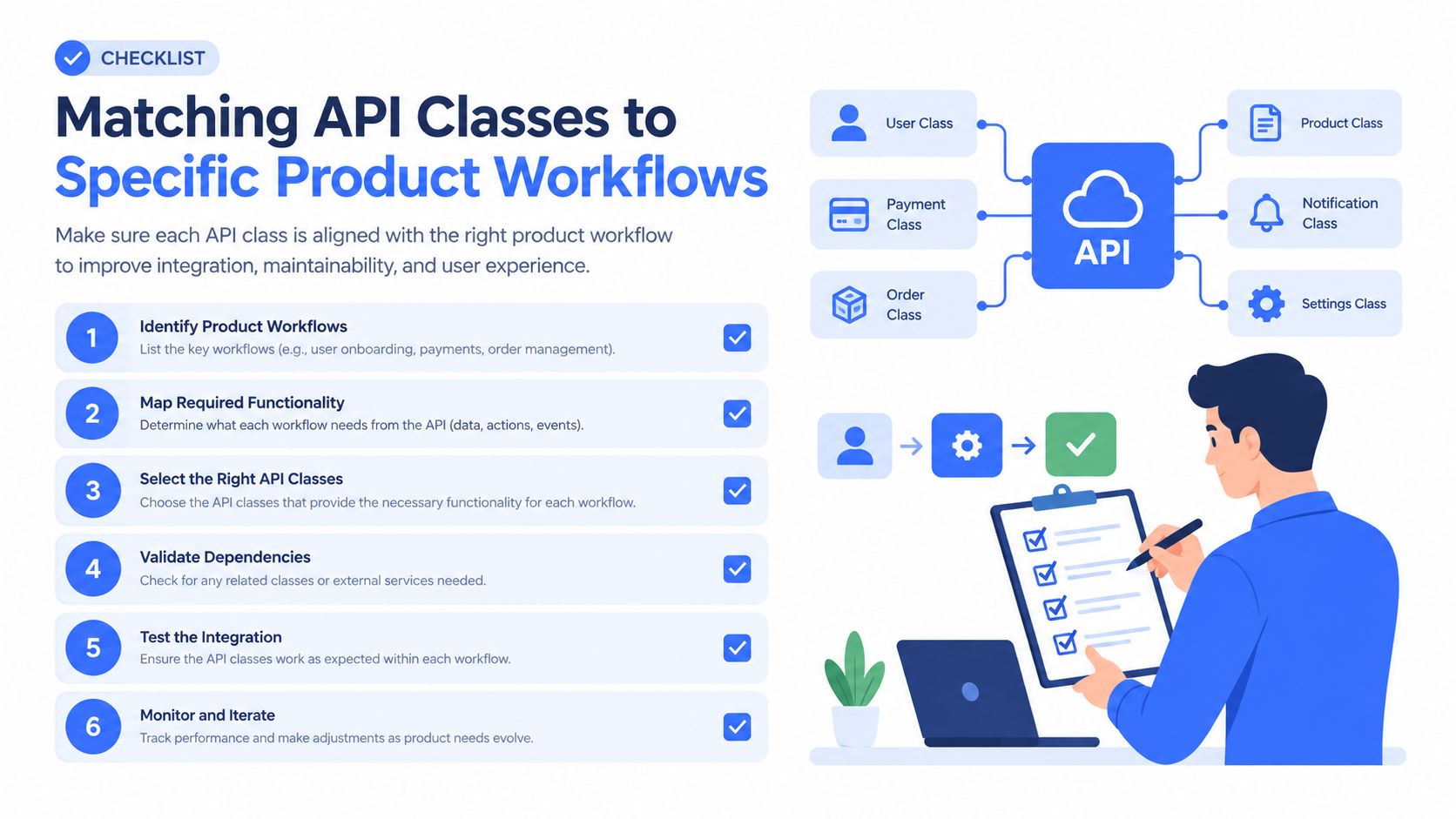
The phrase “Instagram API alternative” becomes useful only after you write down the workflow. A RAG pipeline, a publishing scheduler, a customer inbox, and a competitor tracker may all mention Instagram, but they need different data relationships and permissions.
A practical decision matrix
| Product workflow | Recommended class | Why |
|---|---|---|
| Publish posts, reels, or stories for a customer | Official Graph API or Login API | The customer authorizes access to an eligible account |
| Pull owned-account insights | Official Instagram API | Permissions and account ownership match the data |
| Handle customer DMs | Messaging API | Messaging requires its own permission and event model |
| Track competitor brand mentions | Public-data provider | The target accounts don't belong to your application |
| Feed public reels into a RAG pipeline | Public-data API with structured media fields | Retrieval needs consistent records and repeatable ingestion |
| Generate captions from owned media | Publishing workflow plus your own generation layer | The API handles account delivery, not your content reasoning |
| Export comments for academic research | Public-data extractor or dataset provider | Batch collection and provenance matter more than publishing |
| Discover posts by hashtag or location | Public search endpoint | Search coverage is a core requirement, not an incidental field |
For a RAG pipeline, start with the output schema. You'll likely need stable identifiers, captions, transcript or text fields where available, timestamps, author information, and source URLs. You also need deduplication, because repeatedly embedding the same post can pollute retrieval quality and increase storage without adding information.
For competitor monitoring, define the observation boundary before choosing a vendor. Are you tracking named profiles, hashtags, keywords, locations, or mentions? A provider that handles profile lookups may still be a poor fit for discovery or historical search.
For owned-account publishing, stay with the official class unless there's a strong reason not to. A third-party publishing layer can simplify authentication and cross-platform orchestration, but it doesn't change the underlying account eligibility or Meta policy relationship.
For academic or OSINT exports, favor reproducibility over raw request speed. Save retrieval metadata, preserve the original response where permitted, and document transformations. Researchers need to explain how a dataset was assembled, not just produce a file that looked complete on one day.
Implementing a Unified Social Data Pipeline
A migration works best when you separate your application from platform-specific assumptions before changing providers. Keep your internal model focused on concepts such as profile, post, reel, comment, search result, transcript, and engagement record. Map each provider response into that model at the boundary.
A migration sequence that holds up
Inventory the old integration. List every endpoint, field, permission, token type, webhook, and scheduled job. Mark which features depend on owned-account access and which rely on public discovery.
Define the replacement contract. Specify required fields, pagination behavior, freshness expectations, retry handling, and acceptable missing data. Don't migrate an endpoint just because it has a similar name.
Build an adapter. Keep provider-specific authentication and response parsing in one service. Your product code should call an internal interface, not contain Instagram-specific pagination or error logic in every feature.
Add observability before cutover. Record request outcome, latency, provider error category, response completeness, and cache behavior. Compare the new pipeline against known records before routing all traffic.
Throttle deliberately. Use bounded concurrency, exponential backoff, and idempotent jobs. A provider's advertised capacity doesn't remove the need to protect your own queue, database, and downstream model services.
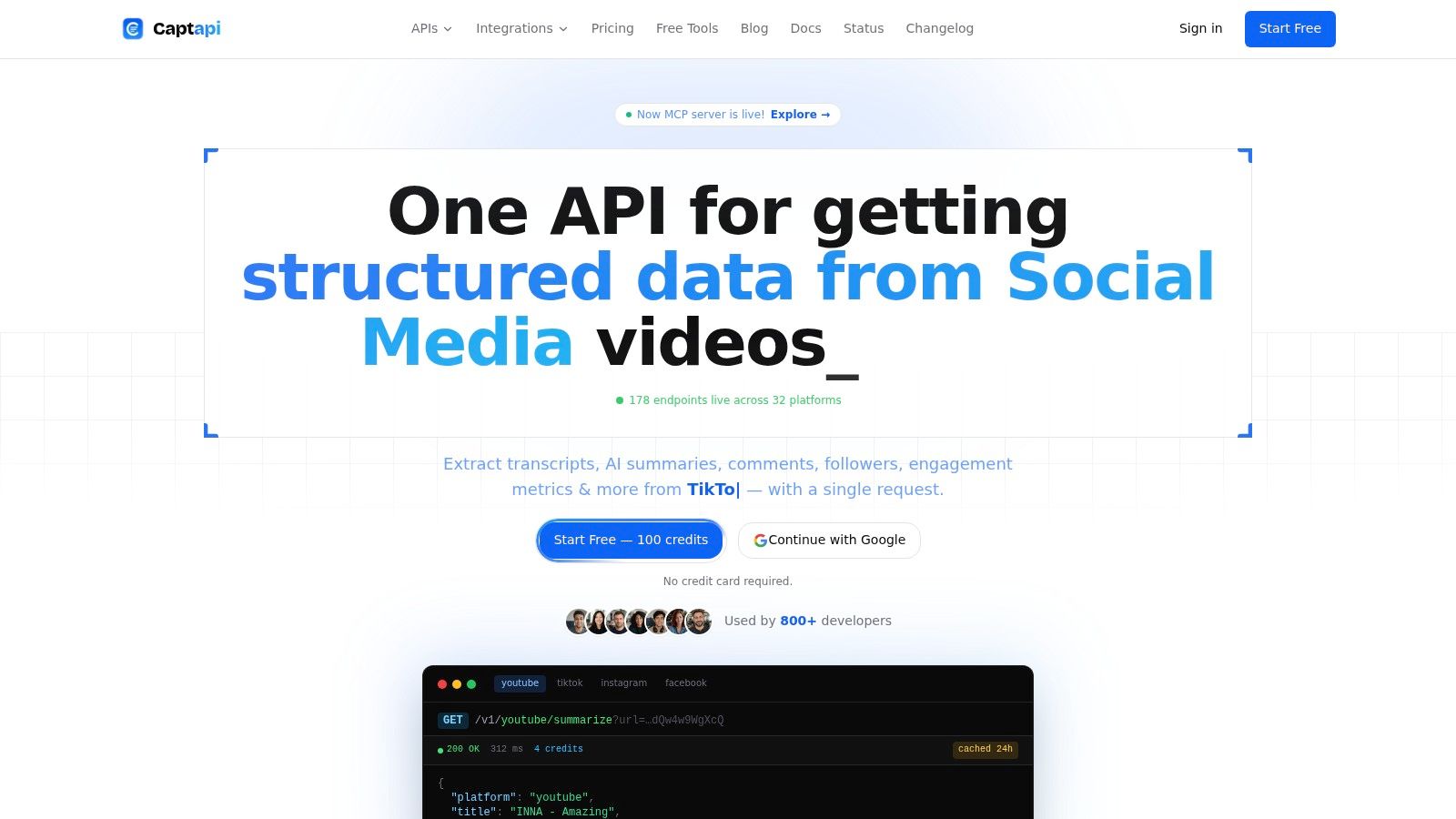
A unified REST interface can reduce the number of SDKs and authentication patterns your team maintains. It can also make cross-platform normalization easier when the same product needs Instagram, TikTok, YouTube, and Facebook records. The trade-off is dependency concentration, so keep an export path and test representative responses regularly.
Teams automating this work can use data pipeline automation guidance to structure ingestion, retries, transformations, and downstream delivery. The implementation detail that matters most is not the first successful request. It's whether the pipeline remains understandable when a provider returns partial data or a platform changes behavior.
Scaling Social Infrastructure for 2026 and Beyond
The strategic shift is from isolated platform SDKs to a social data infrastructure layer. That layer should expose stable internal objects, make provider changes replaceable, and support both live product requests and asynchronous research jobs.
Multi-platform coverage matters because customer requirements rarely stay inside one network. A marketing team may compare Instagram activity with TikTok or YouTube content. An AI product may combine reels, videos, comments, and transcripts in one retrieval system. Separate integrations multiply token handling, schema mapping, monitoring, and incident response.
The operating model to keep
Use official Meta APIs for owned-account publishing, authorized analytics, and messaging where they fit. Use a public-data provider for discovery and monitoring when the required records sit outside your customers' managed accounts. Keep those paths separate in code and in your compliance documentation.
Treat rate limits as a design input, not an emergency fix. Queue non-urgent work, cache repeat reads, batch compatible jobs, and make every write idempotent. A pipeline that depends on unrestricted synchronous access will become fragile as soon as a provider or platform changes its limits.
Finally, review cost by workflow rather than by request alone. A cheap request can become expensive when it triggers retries, duplicate collection, storage, embedding, and reprocessing. Instagram API cost guidance is useful when comparing request pricing with the wider cost of operating the pipeline.
Captapi offers a unified REST interface for public social data across Instagram and other major platforms, with structured endpoints suited to profiles, posts, reels, search, comments, transcripts, and summaries. If you're replacing brittle Instagram integrations or building a multi-platform research pipeline, visit Captapi to evaluate the API against your required workflow.