
YouTube Comments Sentiment Analysis Guide
Getting Started with YouTube Comments Sentiment Analysis
Sentiment analysis on YouTube comments involves examining user feedback to determine overall emotional tone, such as positive, negative, or neutral sentiment. This process can be crucial for brands, researchers, and content creators wanting to understand audience perceptions and reactions. Using APIs to access and analyze YouTube comments makes this task more efficient and scalable.
To begin sentiment analysis on YouTube comments, a key step is accessing these comments programmatically. YouTube, through its Data API, allows developers to retrieve comments for videos, but this involves dealing with various endpoints, consistently managing authentication, rate limiting, and response pagination. Handling these elements manually can become cumbersome, especially for large data sets.
REST APIs simplify extracting YouTube comments by providing structured data formats and consistent interfacing protocols. They allow for integration into various programming environments and support automation of data collection, helping streamline the sentiment analysis workflow. Captapi, for example, provides a REST API that aggregates YouTube comments alongside those from other social platforms. This facilitates a unified approach to data acquisition, bypassing individual platform constraints.
- Register for access to the chosen API and obtain an API key.
- Familiarize yourself with endpoint structures and query parameters for filtering relevant data.
- Implement efficient data handling methods to manage and store large sets of comment data.
Once comments are retrieved, the next phase involves processing this data to perform sentiment analysis, typically leveraging natural language processing (NLP) libraries and models available in programming languages like Python. Advanced sentiment analysis may incorporate AI and machine learning techniques to refine accuracy and insight extraction.
Accessing YouTube Comments via REST APIs
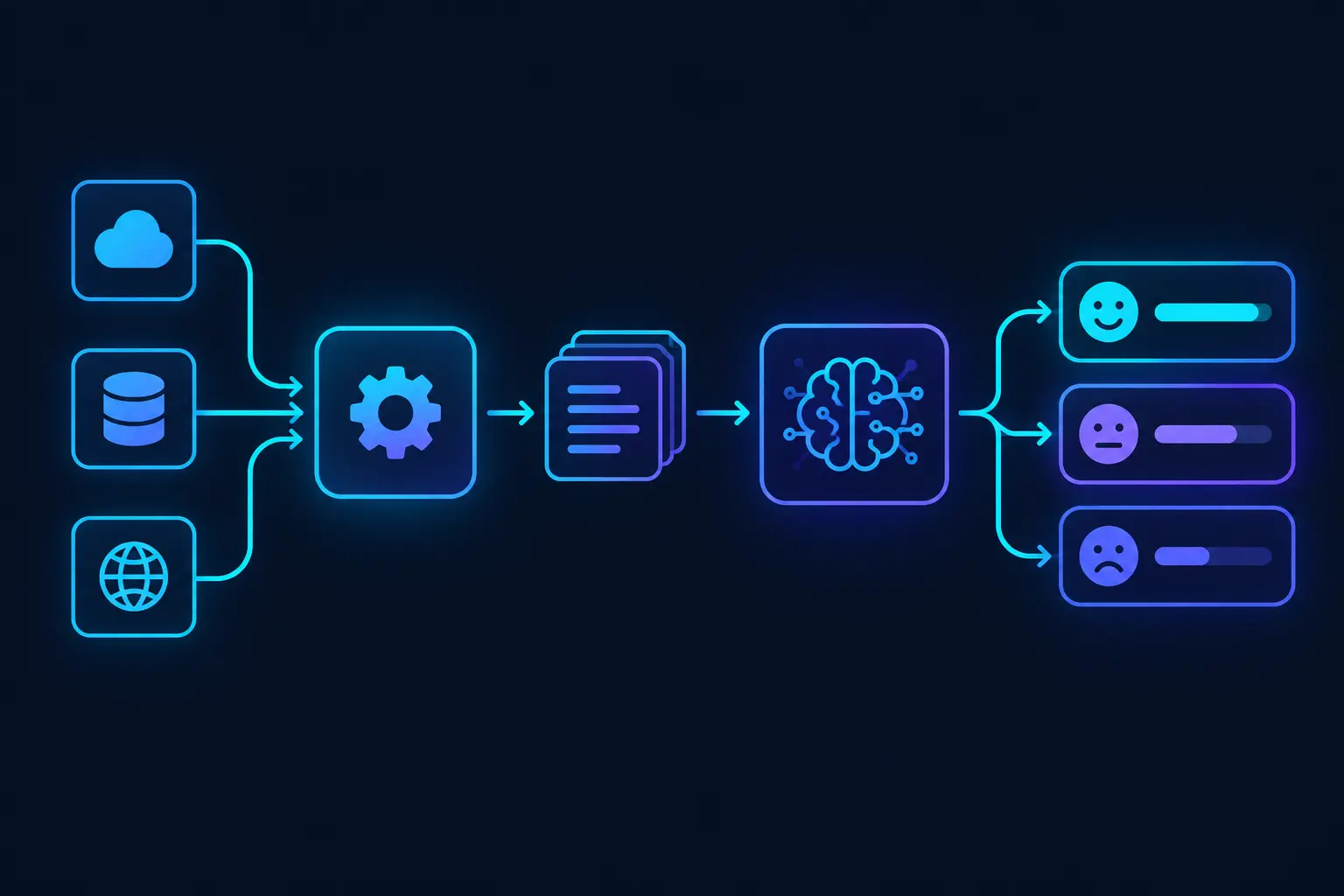
When conducting sentiment analysis on YouTube comments, accessing data efficiently and reliably is crucial. One effective way to extract comments from YouTube is by using REST APIs. REST APIs provide a standardized way to integrate data extraction from platforms like YouTube into your applications. Captapi offers a comprehensive solution for accessing YouTube comments through a simple and effective API.
Using the Captapi YouTube API, developers can easily retrieve comments along with other relevant data such as video details, likes, and replies. With Captapi, you simply send a GET request including your API key and the video ID to retrieve comments in structured JSON format. This structured data includes text, author information, and timestamps, enabling seamless integration with various data analysis workflows.
To get started, sign up for Captapi and acquire an API key. The free tier offers 100 credits, so you can test and refine your requests before committing to a paid plan. Once you have your API key, construct your request with the appropriate endpoint. Here is a basic request pattern:
GET https://captapi.com/apis/youtube/comments?video_id={video_id}&api_key={your_api_key}
- video_id: The unique identifier of the YouTube video you want to analyze.
- api_key: Your personal API key for authentication.
Using a REST API streamlines the data extraction process by handling pagination and providing clean JSON outputs, which are essential for detailed sentiment analysis. By utilizing APIs like Captapi, developers can efficiently gather the necessary data for conducting insightful analyses on YouTube comments.
Overview of Sentiment Analysis Techniques
Sentiment analysis is a crucial technique used to extract subjective information from text data, such as YouTube comments. Various approaches and tools are available to conduct sentiment analysis, each with its own strengths and limitations.
One of the simplest techniques is the lexicon-based approach, which utilizes predefined dictionaries of words annotated with sentiment scores. This method is easy to implement but may lack nuance in handling complex linguistic constructs. Alternatively, the use of machine learning algorithms like Naive Bayes, Support Vector Machines, and logistic regression can offer improved accuracy. These models typically require labeled training data and may perform poorly on unseen data.
Advanced techniques involve deep learning models such as LSTM (Long Short-Term Memory) and transformers like BERT (Bidirectional Encoder Representations from Transformers). These models have demonstrated high accuracy by capturing contextual information but demand significant computational resources and large datasets for effective training.
In addition to standalone tools like NLTK, TextBlob, or Vader Sentiment, cloud-based services such as Google Cloud Natural Language and AWS Comprehend offer scalable solutions for sentiment analysis. These services provide powerful models with ease of integration, but their usage can incur additional costs and have privacy considerations.
| Technique/Tool | Pros | Cons |
|---|---|---|
| Lexicon-based | Simple and quick | Lacks context |
| Machine Learning | Higher accuracy than lexicon | Needs labeled data |
| Deep Learning | Captures context well | Resource-intensive |
| NLTK/TextBlob | Easy to use | Limited to basic analysis |
| Cloud Services | Scalable and powerful | Additional cost |
Implementing Sentiment Analysis Using Python
To perform sentiment analysis on YouTube comments, you can leverage Python with REST APIs to access and analyze the data. First, gather YouTube comments using a reliable API service that provides clean JSON data. Once the comments are obtained, apply natural language processing (NLP) techniques to infer sentiment.
Below is an example of making a request to Captapi to fetch YouTube comments, followed by using a Python library like TextBlob for sentiment analysis. You'll find both a curl request and a Python requests example.
First, use curl to access the API:
curl -X GET "https://api.captapi.com/youtube/comments?video_id=YOUR_VIDEO_ID" \
-H "Authorization: Bearer YOUR_API_KEY"
The corresponding Python code is shown below:
import requests

url = "https://api.captapi.com/youtube/comments"
params = {"video_id": "YOUR_VIDEO_ID"}
headers = {"Authorization": "Bearer YOUR_API_KEY"}

response = requests.get(url, headers=headers, params=params)
comments_data = response.json()

# Example response snippet
print(comments_data)
Upon receiving comments, use the TextBlob library to perform sentiment analysis:
from textblob import TextBlob

for comment in comments_data['comments']:
    analysis = TextBlob(comment['text'])
    sentiment = analysis.sentiment.polarity
    print(f"Comment: {comment['text']}, Sentiment Polarity: {sentiment}")
The JSON response from Captapi provides structured comments like below:
{
    "comments": [
        {"text": "This video is very informative!"},
        {"text": "I didn't find this useful."}
    ]
}
By applying sentiment analysis, you can derive the polarity score for each comment, identifying how positive, neutral, or negative the tone is.
Interpreting Sentiment Analysis Results
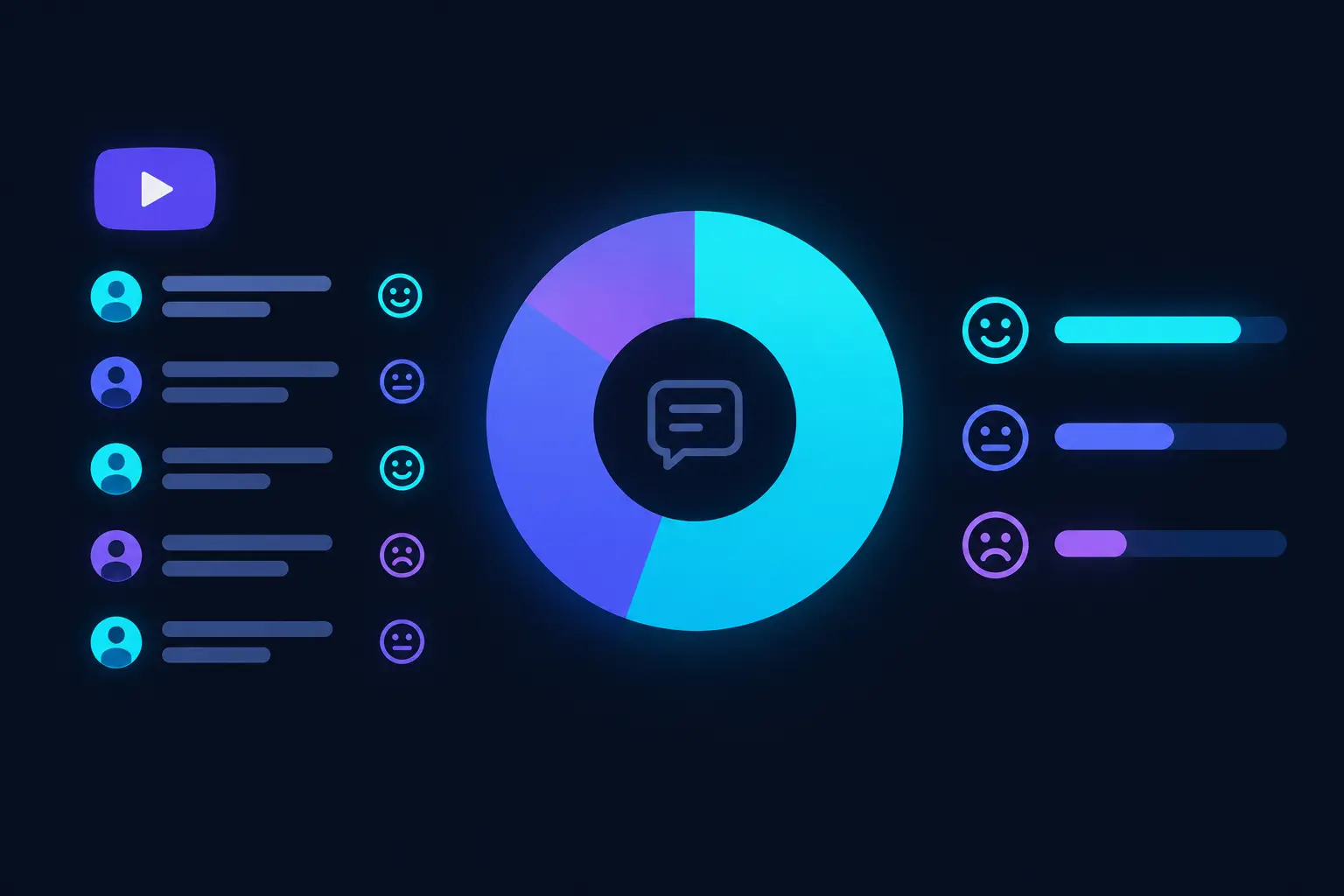
Once you have performed sentiment analysis on YouTube comments, understanding the resulting data is crucial for deriving actionable insights. Typically, sentiment analysis algorithms categorize text into positive, negative, or neutral sentiments often quantified by a score. These scores provide a nuanced measure of the overall sentiment expressed in the comments.
To effectively interpret these results, first consider the context. A large volume of negative sentiment might indicate dissatisfaction with specific content, whereas a high positive sentiment could signal approval or engagement with contributors. Beyond merely identifying the sentiment, delve into the reasons behind it by closely examining the content of high-impact comments. This will help clarify users’ attitudes and pinpoint aspects of the videos or content that provoke strong reactions.
When analyzing sentiment, keep an eye on the distribution of sentiments across different video categories or over time. Trends in sentiment changes can suggest shifts in audience perception or the impact of external events on viewers' opinions.
To prioritize actions, consider the intensity and prevalence of sentiment. Some comments may have outlier scores significantly affecting overall sentiment; investigating these outliers can provide deeper insights. Similarly, identify patterns by comparing sentiment results with other metrics, such as likes, shares, or view counts, to draw correlations between sentiment and engagement levels.
- Review sentiment diversity by sampling a mix of positive, neutral, and negative comments.
- Analyze sentiment trends over time to identify shifts in perceptions.
- Correlate sentiment scores with video performance metrics like views and watch time.
By interpreting sentiment analysis results within the right context and framework, you can make informed decisions to enhance content creation strategies, address audience concerns, and optimize overall viewer engagement.
Using Captapi for Enhanced Sentiment Analysis
Captapi provides a streamlined approach for extracting YouTube comments, making it an effective choice for those looking to perform sentiment analysis. By utilizing Captapi, developers can easily access comprehensive social media data from multiple platforms, including YouTube, via a single REST API call. This eliminates the need to manage multiple APIs, allowing developers more time to focus on sentiment analysis rather than data acquisition.
With Captapi, developers can retrieve YouTube comments in clean JSON format, simplifying the preprocessing steps often required for sentiment analysis tasks. The JSON output includes all relevant fields needed for sentiment analysis, such as the content of comments, timestamps, and user metadata, which can be directly fed into natural language processing (NLP) tools or sentiment analysis models.
Moreover, Captapi offers AI-driven summaries and transcripts, which can be pivotal in understanding the broader context of YouTube comments. This feature allows sentiment analysis models to capture and interpret nuanced emotional cues more accurately. The integration of such detailed contextual data into sentiment analysis workflows can significantly enhance the precision of sentiment predictions.
- Extract complex data efficiently with a single API key.
- Receive data in a structured JSON format for easy ingestion into analysis pipelines.
- Benefit from cross-platform data aggregation capabilities for more comprehensive sentiment insights.
Additionally, Captapi's free tier offers 100 credits, allowing developers to trial the API without financial commitment. This enables the testing of different sentiment analysis techniques and models on actual YouTube data before scaling up your applications. By leveraging Captapi, developers can achieve enhanced sentiment analysis results with minimal overhead.
Frequently asked questions
How can I analyze YouTube comments for free?
You can analyze YouTube comments for free using public APIs like Captapi, which offers a free tier of 100 credits without requiring a card. Extract comments using the API and then apply sentiment analysis algorithms or libraries like VADER, TextBlob, or Python’s NLTK to perform the analysis.
What tools are best for YouTube sentiment analysis?
Tools like TextBlob, VADER (part of the NLTK library), and Google's Natural Language API are popular for sentiment analysis. Captapi can provide the raw YouTube comments which these tools then analyze for sentiment, offering a seamless workflow.
How do I handle multilingual YouTube comment analysis?
To handle multilingual YouTube comment analysis, leverage natural language processing libraries that support multiple languages, such as Google's Natural Language API or polyglot. First, detect the language, then apply the respective sentiment analysis tool optimized for that language.
Can sentiment analysis detect sarcasm in YouTube comments?
Standard sentiment analysis struggles with detecting sarcasm, as it often relies on context and tone, which are challenging for algorithms to interpret. While some AI models are improving in sarcasm detection, this remains a complex task requiring advanced natural language understanding beyond basic sentiment analysis.