
Mastering TikTok Engagement Rate Calculations
Understanding TikTok Engagement Rate
TikTok engagement rate is a crucial metric for evaluating how users interact with content on the platform. It represents the level of user involvement with a given piece of content, typically combining likes, comments, shares, and sometimes views, relative to the total number of followers or viewers.
The primary formula for calculating TikTok engagement rate is:
Engagement Rate (%) = ((Likes + Comments + Shares) / Total Followers) * 100
This formula highlights the proportion of your audience that actively engages with your content. It provides a clearer picture of content effectiveness than raw like counts since it accounts for audience size.
Alternatively, some creators and marketers prefer calculating engagement rate based on views, rather than followers, which can be more representative for viral content:
Engagement Rate by Views (%) = ((Likes + Comments + Shares) / Total Views) * 100
Both methods have their use cases: follower-based calculations offer insight into the regular audience's behavior, while view-based calculations provide a snapshot of a post's overall impact, especially for content that trends beyond the usual follower base.
Understanding these calculations is essential for creators and marketers, as engagement rates are often a metric by which campaign successes are judged. Efficient use of this data allows for content optimization and improved future engagement with the TikTok audience.
Common Engagement Rate Formulas
Calculating TikTok engagement rate involves several common formulas. The most traditional method involves using the number of interactions (likes, comments, shares) in relation to follower count. The formula is:
Engagement Rate = (Total Interactions / Total Followers) * 100
This formula helps determine how engaged your audience is based on follower count. However, due to the nature of TikTok's algorithm, view-based calculations can be more reflective of actual engagement. For this, the engagement rate can be based on views:
Engagement Rate (by Views) = (Total Interactions / Total Views) * 100
This view-based approach provides insight into how well content performs in capturing the attention of viewers, even those who are not followers. Both methods are important for comprehensive analysis, and tools like TikTok Engagement Rate Calculator can assist in these calculations.
curl -X GET "https://api.captapi.com/tiktok/engagement_rate?post_id=123456" -H "Authorization: Bearer YOUR_API_KEY"

import requests

response = requests.get(
    "https://api.captapi.com/tiktok/engagement_rate",
    headers={"Authorization": "Bearer YOUR_API_KEY"},
    params={"post_id": "123456"}
)

data = response.json()
The JSON response might include concise data like:
{
    "followers": 10000,
    "interactions": 1500,
    "views": 20000,
    "engagement_rate_followers": 15.0,
    "engagement_rate_views": 7.5
}
Engagement Rate Benchmarks by Follower Count
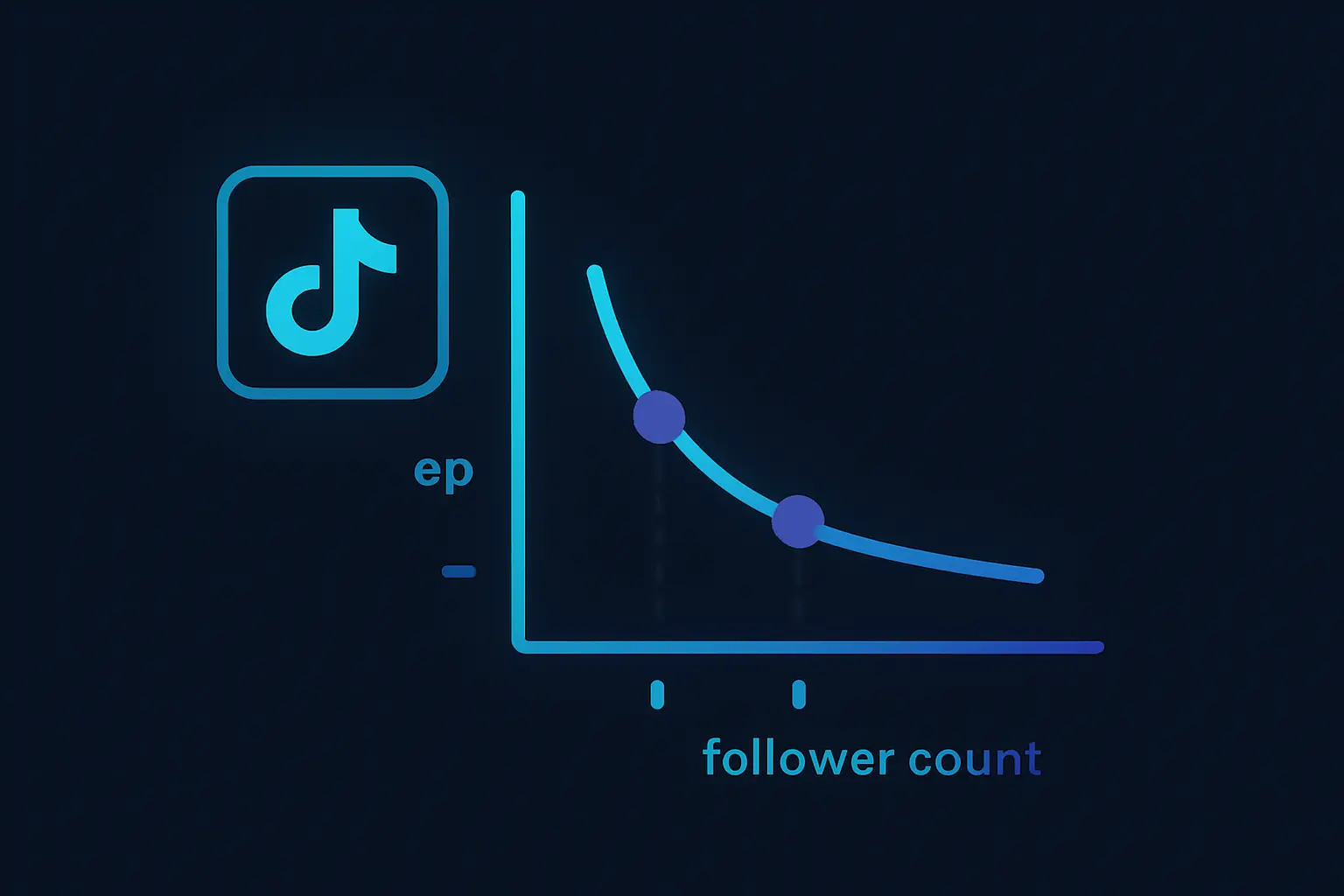
Engagement rate is a crucial metric for TikTok creators to assess the effectiveness of their content. Different follower tiers typically exhibit varying engagement rates. While these rates can fluctuate based on content type and audience demographics, benchmark data provide a useful point of comparison. It's important to note that smaller accounts often experience higher engagement rates, partly due to a more tight-knit community and less diluted audience interaction. As the follower count increases, engagement rates can decrease, reflecting the broader reach but less personalized interactions. Below is a table illustrating average engagement rate benchmarks by follower count on TikTok. This can guide you to understand what to expect or aim for within specific tiers of followers.
| Follower Count | Average Engagement Rate (%) |
|---|---|
| 1,000 - 5,000 | 9.38% |
| 5,000 - 10,000 | 8.01% |
| 10,000 - 50,000 | 6.48% |
| 50,000 - 100,000 | 4.91% |
| 100,000 - 500,000 | 3.21% |
| 500,000 - 1,000,000 | 2.76% |
These benchmarks suggest a trend where smaller TikTok accounts engage their audiences more effectively on a per-follower basis than larger accounts. Larger accounts enjoy the benefit of wider reach, though engagement becomes less concentrated. Understanding these benchmarks allows creators to better strategize their content and engagement efforts to optimize performance on TikTok.
Factors Influencing TikTok Engagement Rates
Several factors can significantly impact engagement rates on TikTok. Content quality is one of the most crucial elements; videos that are well-crafted, entertaining, and resonate with audiences tend to generate higher engagement. High-definition visuals, strong audio quality, and compelling storytelling contribute to improved viewer interaction.
Posting times also play a pivotal role. Content uploaded when a user's target audience is most active is more likely to receive higher engagement. TikTok's algorithm favors consistency, so regularly publishing content can help maintain or increase engagement rates. Understanding the best times to post, often informed by user-specific data or general trends, is essential for maximizing interactions.
Another influencing factor is the use of trends, sounds, and hashtags. Leveraging trending topics and popular sounds can help videos reach a broader audience, as TikTok's algorithm often boosts content that fits current trends. Hashtags can categorize and expand a video's reach, but using too many can appear spammy, so a strategic approach is recommended.
- Collaborations: Partnering with influencers or other users can boost visibility and engagement by reaching new audiences.
- User-generated content: Encouraging followers to create content based on a brand's prompt or challenge can result in higher engagement.
Audience interaction is another key element. Responding to comments, engaging with followers, and creating call-to-action content can encourage users to interact more with posts. Lastly, the creative use of TikTok's platform features, such as effects and filters, can enhance content and capture user interest, leading to increased engagement rates.

Comparison with Other Platforms
TikTok’s engagement rate often exceeds that of other social media platforms, particularly when comparing similar content and audience sizes. This high engagement is partly due to TikTok's algorithm, which promotes discoverability and content sharing. Users are more likely to interact with content as it is shown based on relevance rather than a chronological timeline, encouraging higher rates of engagement such as likes, comments, and shares.
When compared to Instagram, TikTok frequently shows superior engagement rates per post. On Instagram, engagement can often plateau as followers grow. Smaller accounts might experience higher engagement rates, but larger accounts may see this decrease. In contrast, TikTok allows creators to maintain higher engagement levels due to the potential of reaching beyond their immediate follower base through its "For You" page feature.
YouTube, which focuses on longer-form video content, typically has lower engagement rates per post compared to TikTok. Engagement on YouTube is often in the form of view counts rather than interactions like comments or likes, which can be lower in number. The nature of engagement on YouTube tends to be more passive, with users primarily consuming content without active participation in discourse.
- TikTok: High engagement due to algorithmic discovery.
- Instagram: Varies by follower count, growth can reduce engagement rate.
- YouTube: Lower interaction despite potentially higher views.
Overall, TikTok's model drives considerable user interaction, often surpassing engagement levels seen on Instagram and YouTube. This is crucial for content creators prioritizing active viewer participation and retention.
Improving Your TikTok Engagement
Enhancing engagement on TikTok requires a strategic mix of creativity and timing. To increase your engagement rates, focus on publishing content that resonates with your target audience. Analyze trending topics within your niche and incorporate them creatively into your videos to capture attention. Use relevant hashtags to increase discoverability, but avoid overloading your caption with too many, aiming for a balance that enhances searchability without appearing spammy.
Consistency is key, and developing a regular posting schedule helps maintain visibility in a viewer's feed. Use TikTok Analytics to identify peak times when your audience is most active, and schedule posts accordingly. Engaging with viewers through comments and live sessions fosters community interaction and can enhance user retention. Encourage viewer participation by incorporating interactive elements like polls or challenges in your content.
Your video format also significantly impacts engagement. Keep your content concise and visually appealing to maintain viewer interest. Leverage TikTok’s editing tools and effects to enhance your videos creatively. Collaborations with other creators, particularly those with overlapping audiences, can introduce your content to new viewers and boost engagement rates.
- Utilize trending music tracks to align with platform popularity trends.
- Ensure captions are succinct yet engaging to complement video content.
Finally, track and analyze your performance regularly to refine your approach, using A/B testing strategies to determine what content formats and styles yield the highest engagement. By consistently evaluating and adapting to audience preferences, you can improve your overall TikTok engagement.
Frequently asked questions
What is a good engagement rate for TikTok?
A good engagement rate on TikTok is generally considered to be between 5% and 10%. However, this can vary based on the size of the account and the type of content being posted. Smaller accounts often see higher engagement rates compared to larger accounts.
Is 10% engagement rate on TikTok good?
Yes, a 10% engagement rate on TikTok is considered very good. This rate indicates that a significant portion of your audience is actively engaging with your content, which is a positive signal for reach and influence on the platform.
How is TikTok engagement rate calculated?
TikTok engagement rate is calculated by adding up the number of likes, comments, and shares, then dividing by the total number of followers. Multiply the result by 100 to get a percentage. This formula provides a measure of how actively your content resonates with your audience.
What factors influence TikTok engagement rates?
Several factors influence TikTok engagement rates, including the quality and relevance of content, timing of posts, use of trending hashtags, and the level of interaction with followers. Consistency in posting and understanding the target audience's preferences are also crucial elements that can impact engagement rates.