
Is Web Scraping Legal on Social Media?
Is Web Scraping Legal on Social Media?
Web scraping on social media platforms is a legally complex topic with no straightforward answer. Generally, the legality of web scraping involves considerations of terms of service (ToS), intellectual property rights, privacy laws, and data protection regulations. Most social media platforms, such as Facebook, Twitter (X), and LinkedIn, include explicit restrictions against automated data scraping within their ToS. Violations of these terms can result in bans or legal action, although enforcement varies.
Beyond ToS, intellectual property laws may protect the content available on social media platforms. For example, scraping copyrighted material without proper authorization could lead to legal consequences. Furthermore, data protection regulations, such as the EU's General Data Protection Regulation (GDPR) and California's Consumer Privacy Act (CCPA), impose strict rules on personal data collection and processing. Social media content that includes personal data could be subject to these regulations, raising potential legal risks if not properly controlled and consented to.
Another legal consideration involves the Computer Fraud and Abuse Act (CFAA) in the United States, which prohibits unauthorized access to computer systems. Court rulings, like hiQ Labs v. LinkedIn, suggest that scraping publicly accessible data might not constitute a CFAA violation, but the legal landscape remains uncertain and subject to change.
- Terms of Service (ToS) adherence is crucial
- Intellectual property rights must be respected
- Data protection laws can impact legality
- Cases like hiQ Labs v. LinkedIn influence legal interpretation
Ultimately, ensuring the legality of web scraping on social media requires careful attention to the platform's policies and applicable laws in the relevant jurisdiction.
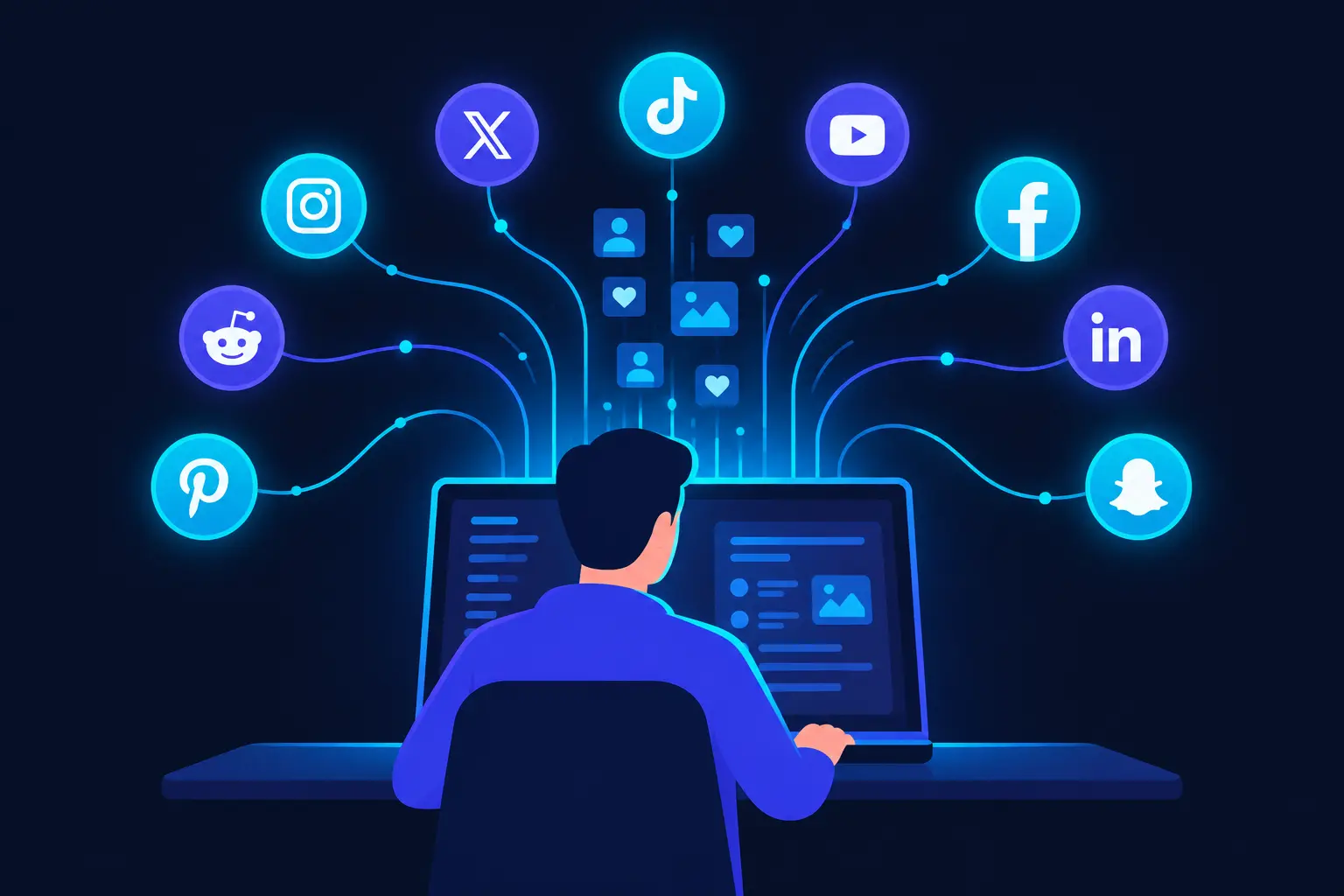
Case Study: hiQ Labs v. LinkedIn
The hiQ Labs v. LinkedIn case is a pivotal legal battle with significant implications for web scraping, especially when it comes to social media platforms. The case began when LinkedIn issued cease-and-desist letters to hiQ Labs, a company that scrapes public LinkedIn profiles to extract data for people analytics services. LinkedIn argued that hiQ's activities violated the Computer Fraud and Abuse Act (CFAA), as well as LinkedIn's terms of service.
HiQ sought a preliminary injunction to prevent LinkedIn from blocking its access to publicly available information. The U.S. District Court for the Northern District of California ruled in favor of hiQ, stating that the potential harm to hiQ outweighed LinkedIn's privacy concerns, given that the data was already public. This injunction was later upheld by the Ninth Circuit Court of Appeals, which emphasized that publicly accessible data could not be protected under the CFAA.
The main implications of this case revolve around the interpretation of the CFAA and its application to web scraping. The ruling suggests that scraping publicly accessible data may not constitute unauthorized access, potentially mitigating some legal risks associated with scraping. However, it is essential to note that this ruling is applicable primarily within the jurisdiction of the Ninth Circuit and does not constitute a blanket approval for all web scraping activities.
- hiQ argued public data access cannot be blocked under CFAA.
- LinkedIn's terms of service still restrict scraping without explicit permission.
Entities engaging in web scraping need to consider cases like hiQ Labs v. LinkedIn when evaluating compliance and legal risks associated with their data collection practices.
Legal Risks Associated with Social Media Scraping
Web scraping social media data can lead to significant legal risks, primarily due to platform terms of service, potential violation of privacy laws, and intellectual property issues. Most social media platforms prohibit scraping in their terms of service. Ignoring these terms may lead to account suspension, legal notices, or court cases. In some cases, like the litigation between hiQ Labs and LinkedIn, companies have faced lawsuits when their scraping activities allegedly violated user agreements.
Another critical legal risk involves privacy laws such as the General Data Protection Regulation (GDPR) in Europe and the California Consumer Privacy Act (CCPA) in the United States. These regulations impose strict guidelines on the collection and use of personal data. Web scraping that collects personal information without explicit consent can be deemed illegal, resulting in hefty fines and penalties.
Intellectual property laws also play a role when scraping data from social platforms. Content generated on these platforms may be protected under copyright law, prohibiting unauthorized reproduction or distribution. Violation of these laws can lead to claims of intellectual property infringement.
- Terms of Service Violations
- Privacy Law Breaches
- Intellectual Property Infringement
Finally, scraping activities that overload a platform's servers can trigger legal action based on anti-hacking laws such as the Computer Fraud and Abuse Act (CFAA) in the United States. Legal risks are multifaceted and can have severe consequences, making it crucial for developers to assess compliance thoroughly when scraping social media data.
Web Scraping Laws by Region
The legal landscape regarding web scraping varies significantly across different regions. In the United States, web scraping legality is a complex issue primarily influenced by the Computer Fraud and Abuse Act (CFAA). This federal law makes unauthorized access to computers illegal, and its application to web scraping hinges on the interpretation of “authorization.” Court rulings, such as in hiQ Labs v. LinkedIn, suggest that scraping publicly accessible data may not violate the CFAA, though the context is essential.
In Europe, the General Data Protection Regulation (GDPR) greatly affects web scraping practices. The GDPR applies to the processing of personal data, which includes data obtained through scraping. Companies must ensure compliance with GDPR requirements, such as obtaining user consent and providing data subjects with their rights, to avoid significant penalties.
Countries in Asia and other regions vary in their approach. For example, India has yet to establish specific legislation directly addressing web scraping, whereas data protection laws may indirectly influence practices. In Japan, the Act on the Protection of Personal Information (APPI) impacts data scraping as it governs personal data handling. In several Middle Eastern and African nations, legal frameworks are still evolving, with web scraping implications being defined by broader cybersecurity and data protection laws.
| Region | Legal Considerations |
|---|---|
| United States | Subject to the CFAA; case law interpretations vary. |
| Europe | GDPR compliance required if personal data is processed. |
| India | No specific laws; affected by general data protection regulation. |
| Japan | APPI dictates handling of personal data. |
| Middle East & Africa | Frameworks evolving; informed by cybersecurity laws. |
Ethical Considerations for Web Scraping
Web scraping, while technically feasible, raises several ethical questions, especially concerning social media platforms. Primarily, scraping involves collecting data that may not be intended for automated extraction, leading to potential privacy issues. User consent is a significant ethical aspect; scraping should respect the privacy settings users have established on their profiles. Even if technically legal under certain conditions, harvesting data without explicit consent can breach the trust between users and the platforms they engage with.
Beyond privacy, the purpose of data scraping should also be considered. Using the scraped data responsibly and transparently is crucial. If the data is utilized for purposes that users may not anticipate or authorize, such as targeted advertising or coercive persuasion, the ethical standing of such activities is questionable. Transparency in how the scraped data will be used can help in maintaining ethical standards.
Furthermore, maintaining the integrity and functionality of the platform being scraped is essential. High-frequency scraping can lead to degraded performance for the platform, affecting its service to genuine users. Balancing data collection practices with the operational stability of the target platform is crucial.
- Respect user privacy settings and terms of service.
- Avoid harmful impact on platform functionality.
- Use data transparently and responsibly.
Incorporating ethical considerations in web scraping practices is not just about adhering to laws but also about preserving the trust and integrity of data interactions on social media platforms. This conscientious approach benefits all stakeholders involved, fostering a respectful digital environment.
Example: Using an API for Social Media Data
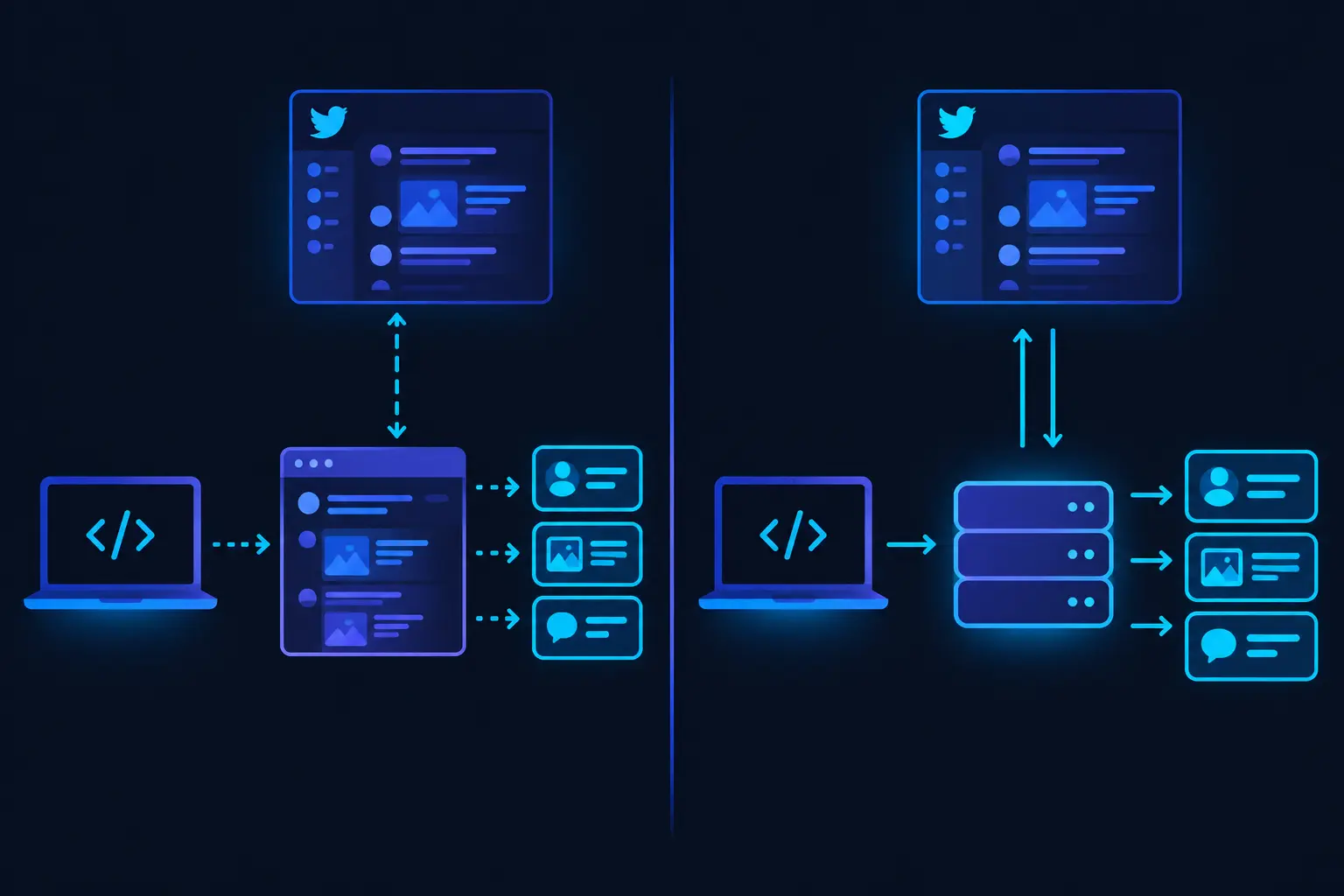
Accessing social media data using an API can simplify the process significantly compared to web scraping. APIs provide structured and often more reliable data access. Here we demonstrate how to use Captapi to retrieve a user's social media profile data from multiple platforms with a single request. This example covers both a curl command and a Python script.
First, using curl, you can make an API request to Captapi as follows:
curl -X GET "https://api.captapi.com/profile?platform=instagram&username=example_user" \
-H "Authorization: Bearer YOUR_API_KEY" \
-H "Content-Type: application/json"
In Python, the following script performs the same request:
import requests

url = "https://api.captapi.com/profile"
headers = {
    "Authorization": "Bearer YOUR_API_KEY",
    "Content-Type": "application/json"
}
params = {
    "platform": "instagram",
    "username": "example_user"
}

response = requests.get(url, headers=headers, params=params)

profile_data = response.json()
print(profile_data)
Assuming successful authentication and a valid request, the API returns a JSON response similar to the one below, which includes key details from the specified Instagram profile:
{
    "username": "example_user",
    "full_name": "John Doe",
    "bio": "Photographer & Traveler",
    "followers_count": 1500,
    "following_count": 300,
    "post_count": 68
}
Using an API for gathering social media data not only respects legal constraints more effectively but also reduces the complexity involved in collecting and parsing the data manually.
Frequently asked questions
Is social media scraping legal?
The legality of social media scraping varies by jurisdiction and platform terms of service. Generally, scraping publicly available data is a gray area legally, but many platforms prohibit it in their terms. Always review the specific platform's terms and conditions before scraping.
Can I get sued for web scraping?
Yes, you can potentially face legal action for web scraping, especially if you violate a platform's terms of service. Legal actions can arise from claims of breach of contract, violation of anti-hacking laws, or misuse of copyrighted material. Consulting with legal counsel is advisable if you're uncertain.
Is it illegal to scrape data from Instagram?
Scraping data from Instagram can be against their terms of service, which prohibits unauthorized data collection. Violating these terms can lead to legal action or being banned from the platform. Always adhere to the platform's policies and consider alternatives like official APIs where available.
Is web scraping for commercial use legal?
Web scraping for commercial purposes is often more scrutinized legally, particularly if it involves large-scale data collection or breaches website terms of service. Legal risks include intellectual property infringement and breach of contract. Reviewing legal implications and platform guidelines is crucial for commercial scraping projects.