
Facebook Page Scraper: Tools & Legal Guide
Facebook Page Scraper Overview
A Facebook page scraper is a tool designed to extract publicly available data from Facebook pages. This data can include a variety of elements such as page details, posts, comments, reactions, and follower counts. By automating the process of data extraction, scrapers can provide comprehensive insights into Facebook pages without manual intervention.
Facebook page scrapers are commonly used in several contexts. Businesses may use them to analyze competitor activities, monitor brand mentions, or track marketing campaign effectiveness. Researchers and data analysts rely on these tools to gather large datasets for sentiment analysis, trend prediction, or academic studies. Additionally, marketers might leverage scrapers to identify key influencers and understand audience engagement patterns.
While Facebook provides some data access through its Graph API, scrapers can extract additional information not fully covered by the API, particularly when specific filtering or aggregation is required. However, this capability comes with challenges related to Facebook's terms of service and potential legal implications.
- Automated data collection from public Facebook pages
- Analysis of competitor strategies and brand presence
- Gathering datasets for academic or market research
Despite these uses, it's crucial to approach Facebook scraping with an understanding of ethical and legal considerations. Misuse of scraping tools can lead to account bans or legal actions. Therefore, ensuring compliance with Facebook’s terms of service while deriving insights remains a critical balance for any user leveraging these technologies.

Comparison of Popular Facebook Page Scraping Tools
When selecting a Facebook page scraping tool, it's essential to evaluate the features and capabilities that each tool provides. The effectiveness of a scraper can depend on a number of factors including ease of use, API support, data format, frequency of updates, and compliance with Facebook's terms of service. Below is a comparison of popular tools based on these factors:
| Feature | Tool A | Tool B | Tool C | Captapi |
|---|---|---|---|---|
| Ease of Use | High | Medium | Low | High |
| API Support | Yes | No | Yes | Yes |
| Data Format | JSON | CSV | XML | JSON |
| Update Frequency | Weekly | Monthly | Daily | Real-time |
| Compliance | Moderate | Low | High | High |
This table outlines key differences that can help determine which tool fits your specific needs. Tool A offers simplicity and JSON output, making it a good choice for straightforward tasks, but lacks the update frequency of Tool C. Tool B is more accessible price-wise with CSV outputs, ideal for basic data needs, though limited in compliance. Tool C provides daily updates and comprehensive compliance but requires more technical expertise. Captapi stands out with its ease of use, API support, real-time updates, and JSON data format, making it a well-rounded option for developers looking for a dependable and compliant solution.
Understanding Legal and Ethical Considerations in Facebook Scraping
When scraping Facebook pages, it's crucial to abide by legal guidelines and ethical standards. Facebook's Terms of Service explicitly prohibit unauthorized data scraping. Violating these terms can lead to account suspension or legal action. Companies and developers must ensure their activities are compliant with the platform's rules to avoid repercussions.
Legality aside, ethical considerations also play an important role in scraping activities. It's essential to respect user privacy and data protection laws, such as the General Data Protection Regulation (GDPR) in the European Union. These laws may restrict certain data elements from being collected or demand consent from the user for data processing.
It is important to be aware of the following key considerations for ethical scraping:
- Avoid collecting personally identifiable information (PII) unless permitted.
- Provide clear opt-out options if reusing collected data.
- Ensure that data usage complies with the intended and declared purposes.
Additionally, implementing rate limiting and respecting the robots.txt file can help prevent overloading Facebook's servers, maintaining good practices aligned with web scraping standards. Engaging with legal experts or consulting Facebook's legal documentation is advisable to align practices with legal requirements.
Adhering to both legal and ethical guidelines protects not only the developers but also respects the rights and privacy of the users whose data is being accessed. Practicing responsible scraping fosters a sustainable ecosystem for data collection and use.
Using Captapi for Facebook Page Data
Captapi simplifies the process of extracting Facebook page data by providing a unified endpoint that returns structured JSON. With Captapi, developers can access various data points available on a Facebook page, including posts, comments, likes, and more, without dealing with complex HTML parsing. Captapi handles the data aggregation, filtering, and formatting, saving valuable development time.
To start using Captapi for Facebook page data extraction, you need to obtain an API key from Captapi, which is straightforward and requires no credit card details for the free tier. Once you have the API key, you can make RESTful calls to the Captapi endpoint dedicated to Facebook. The API supports various query parameters to customize your data requests, letting you specify which Facebook page and specific type of data you need, from basic profile information to detailed post metrics.
The response from Captapi is returned in a clean, consistent JSON format that integrates easily with any backend or data processing pipeline. This removes the need for additional client-side data cleaning or transformation processes. As a result, Captapi is particularly useful for applications that require real-time data access and processing, such as social media analytics and monitoring tools.
- Easy integration with existing software systems.
- Fast onboarding with minimal setup.
- Ability to scale from basic data queries to complex analytical requests.
With Captapi, accessing and utilizing Facebook page data becomes an efficient task, allowing developers to focus more on application-specific logic rather than on the complexities of data extraction and transformation.
Python Code Example for Scraping Facebook Pages
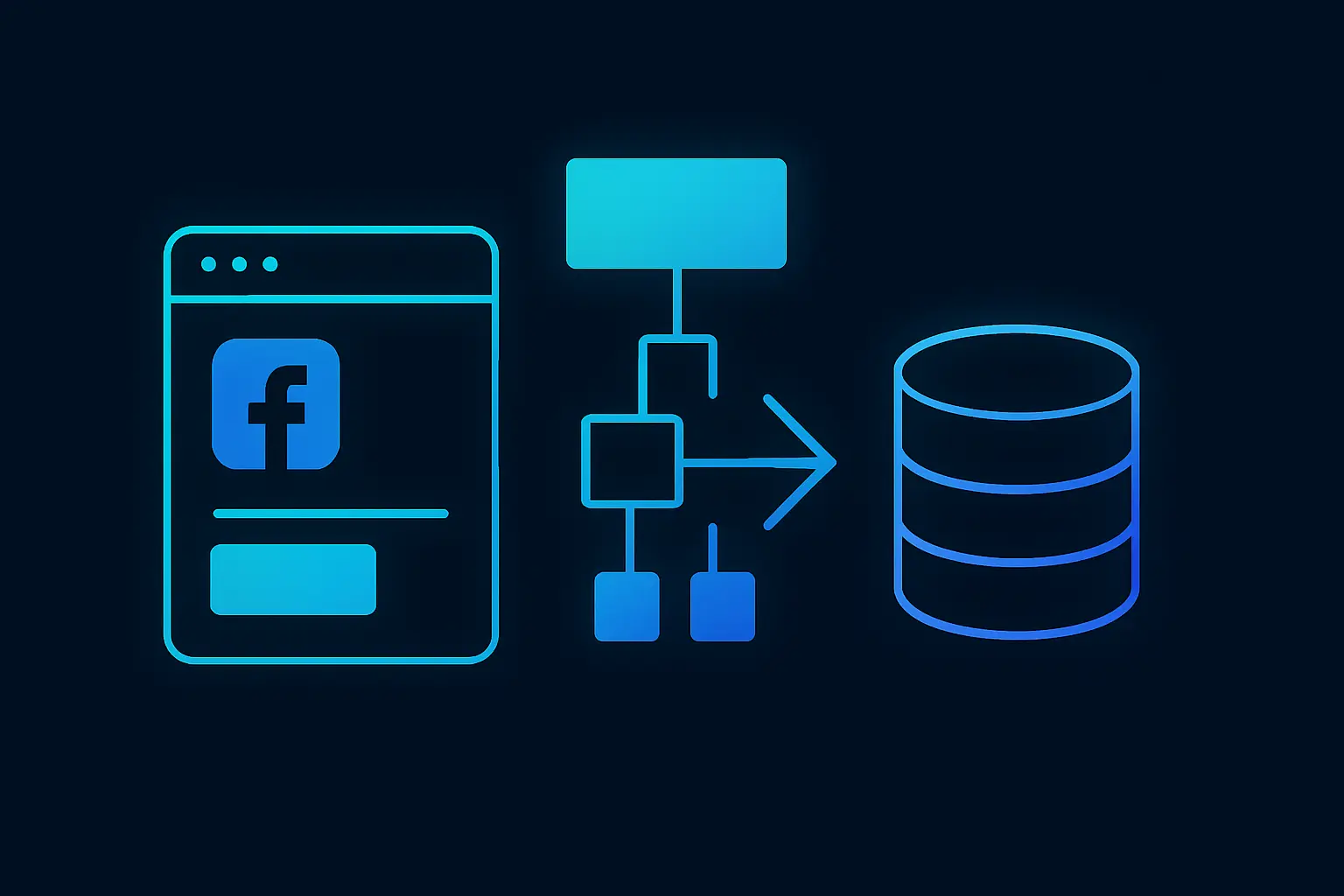
To access Facebook page data using a structured API approach, leveraging Captapi can simplify the process. Below is a guide on how to retrieve Facebook page data with Captapi through both curl and Python code.
First, ensure you have obtained your API key from Captapi. Place your API key in the 'Authorization' header as demonstrated in the examples.
Let's start with a basic curl example:
curl -X GET "https://api.captapi.com/facebook/page" \
-H "Authorization: Bearer YOUR_API_KEY" \
-H "Content-Type: application/json" \
-d '{"page_id": "your_page_id"}'
In Python, you can use the requests library to achieve the same:
import requests

url = "https://api.captapi.com/facebook/page"
headers = {
    "Authorization": "Bearer YOUR_API_KEY",
    "Content-Type": "application/json"
}
data = {
    "page_id": "your_page_id"
}

response = requests.get(url, headers=headers, json=data)
page_data = response.json()

print(page_data)
The JSON response from Captapi provides structured page data. Here’s a sample snippet of the response:
{
  "page_id": "123456789",
  "name": "Example Page",
  "likes": 100000,
  "followers": 99000,
  "about": "This is an example Facebook page."
}
Modify the page_id value to match the page you are interested in. This example demonstrates making requests in a RESTful manner using Captapi, ensuring clean and organized data retrieval.
Best Practices for Efficient Facebook Page Scraping
Efficient Facebook page scraping requires a careful approach to ensure data accuracy and adherence to legal standards. Begin by understanding and respecting Facebook's terms of service. It's crucial to remain compliant to avoid legal repercussions, which means monitoring available rule changes and implementing them promptly.
Use authenticated requests when possible. Accessing Facebook data through official APIs typically provides more reliable and structured information than manual methods. APIs like Captapi can facilitate efficient data gathering by offering comprehensive data across numerous platforms, including Facebook, through authenticated access.
Optimize data fetch requests to minimize bandwidth usage and reduce server load. Implement rate limiting strategies to prevent request flooding, which can lead to temporary bans. Adjust your approach based on response time to accommodate server limitations, and implement exponential backoff for retries to avoid excessive pressure on server resources.
Employ data management strategies to handle large volumes efficiently. Organize the retrieved data in structured formats like JSON or CSV, allowing easy manipulation and analysis. Regularly clean and validate data to remove duplicates and inconsistencies, ensuring the dataset remains useful and relevant.
Testing and monitoring are integral to maintaining scraping efficiency. Continuously test scraping scripts, and adapt them to changes in page structure that could impact data accuracy. Monitoring tools can provide insights into potential issues, such as increased error rates or unexpected downtime, permitting timely interventions.
- Respect rate limits and server response times
- Use official APIs where possible
- Organize data for easy processing and analysis
- Continuously validate and clean collected data
Frequently asked questions
Is web scraping illegal?
Web scraping is not inherently illegal, but it must comply with the terms of service of the website being scraped. Violating these terms, or scraping data without permission or bypassing protections, can lead to legal consequences. Always ensure your scraping activities are lawful by obtaining necessary permissions or using official APIs.
How to get data from a Facebook page?
To get data from a Facebook page, use the official Facebook Graph API, which allows access to publicly available data if you have the correct permissions. Alternatively, tools like Captapi offer a simpler way to gather data from Facebook and other platforms by providing easy-to-use endpoints that return data in JSON format.
What are the best Facebook page scraper tools?
Some popular tools for scraping Facebook page data include the Facebook Graph API, Octoparse, and Puppeteer. Each tool has its own strengths, such as ease of use, data handling capabilities, or the ability to automate tasks. Captapi is a competitive option as well, combining data from multiple platforms into a single API interface.
How to ensure compliance when scraping Facebook?
To ensure compliance when scraping Facebook, adhere strictly to their Robots.txt file and terms of service. Employ rate limiting, respect data access permissions, and consider using the official Graph API for legitimate data access. Additionally, using a service like Captapi can help streamline adherence to these requirements by offering compliant access to data from Facebook and other platforms.