
Access TikTok Transcript API for Video Data
Accessing TikTok Transcripts via API
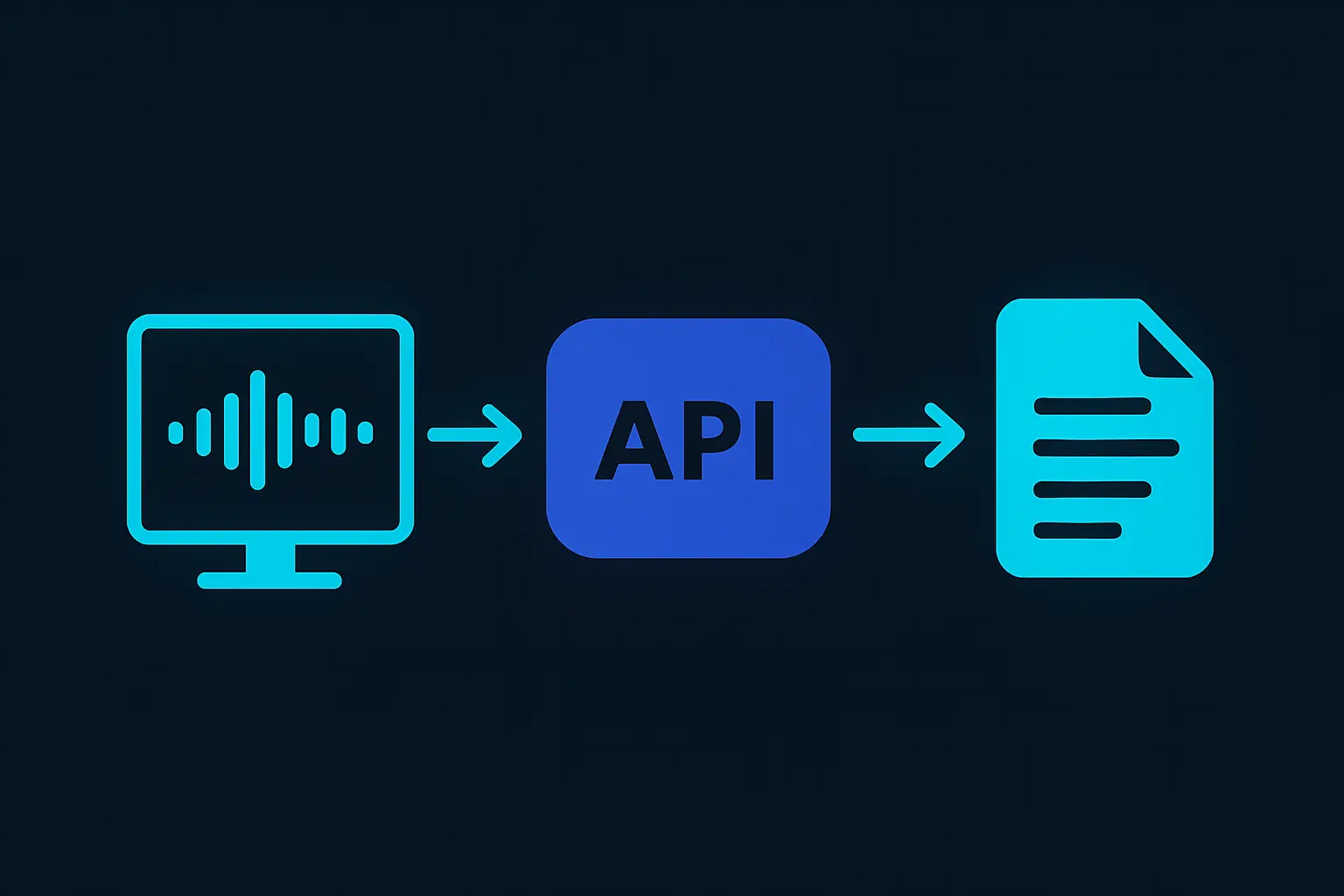
Developers seeking to access transcripts from TikTok videos can leverage various APIs designed for social media data retrieval. These APIs typically offer endpoints that allow you to extract text or audio data, encompassing captions or generated transcripts from TikTok content. Accessing this information programmatically can streamline the process for applications that require social media content analysis, sentiment tracking, or content moderation.
To retrieve TikTok transcripts, developers often need to sign up for an API service that offers TikTok data access. After registering, an API key is usually provided, which must be included in your API request headers for authentication purposes. The request to access TikTok transcripts involves specifying the video identifier or URL, which the API uses to locate and extract the desired transcript data.
Several APIs support TikTok transcript extraction, each with different integration complexities and feature sets. Some APIs provide only basic transcript data, while others might offer enriched outputs, such as audio sentiment analysis or natural language processing features. Consider any API’s documentation carefully to understand the exact request format and types of data included in their response.
- Check API quotas and rate limits to manage requests efficiently.
- Consider platform compliance and legal considerations when handling TikTok data.
- Confirm API support for handling multiple languages or script variations.
By utilizing a dedicated API service, developers can automate the retrieval of TikTok transcripts, thereby integrating this capability seamlessly into their applications or services.

API Comparison for TikTok Transcript Retrieval
When selecting an API for retrieving TikTok transcripts, key features and pricing are crucial considerations. Various API providers offer different capabilities and price structures, impacting both small-scale projects and enterprise solutions. Evaluating options helps in choosing the most suitable API according to your specific requirements.
| API Provider | Main Features | Pricing Model |
|---|---|---|
| Captapi | Multi-platform support, AI summaries, JSON output, no card needed for free tier | Free 100 credits, pay-as-you-go model |
| ScraperAPI | Customizable scraping, rotating proxies, location-based IPs | Subscription-based with monthly plans starting at $49 |
| SerpApi | Real-time data, integrated search engines, structured data output | Free trial, subscription-based pricing with monthly plans starting at $50 |
| Oxylabs | Dedicated data centers, wide coverage, session control | Enterprise-focused with custom pricing options |
| DataMiner | Browser extension, single-click data extraction, customizable workflows | Free basic version, tiered pricing for premium features |
For a more comprehensive set of functionalities, including TikTok transcripts and AI-generated summaries, access the features offered by Captapi's TikTok Transcript tool. Understanding the capabilities and pricing helps in selecting the most aligned service with your development needs.
Retrieve TikTok Transcripts Using Captapi
To fetch TikTok video transcripts using Captapi, you need to make a request to the TikTok API endpoint. Captapi simplifies this process by delivering a unified JSON response format. Ensure you have your Captapi API key ready.
The following code examples demonstrate how to request TikTok video transcripts using both curl and Python.
Curl Example:
curl -X GET "https://captapi.com/apis/tiktok/transcripts" \
-H "Authorization: Bearer YOUR_API_KEY" \
-d "video_id=123456789"
Python Example:
import requests

url = "https://captapi.com/apis/tiktok/transcripts"
headers = {
    "Authorization": "Bearer YOUR_API_KEY"
}
params = {
    "video_id": "123456789"
}
response = requests.get(url, headers=headers, params=params)

transcript_data = response.json()
print(transcript_data)
Replace YOUR_API_KEY with your actual Captapi API key and video_id=123456789 with the TikTok video ID you wish to retrieve the transcript for.
The response will be in JSON format, providing both the text of the transcript and metadata. Here is a short example of what you might expect in the response:
{
    "transcript_id": "abc123",
    "video_id": "123456789",
    "language": "en",
    "transcript_text": "[00:00:01] Welcome to our TikTok video..."
}
For more detailed information about this endpoint, you can visit the TikTok API documentation.
Understanding TikTok Transcripts and Their Use Cases
TikTok transcripts provide a structured text representation of spoken content within TikTok videos. By extracting speech data and converting it into text, developers can leverage transcripts to enhance accessibility, improve content discoverability, and enable advanced data analysis. Text analysis and natural language processing (NLP) algorithms can be applied to these transcripts, allowing businesses to gain insights into trends, sentiments, and user behavior.
One primary benefit of using TikTok transcripts is accessibility. Transcripts help make video content accessible to users who are deaf or hard of hearing by providing them with the ability to read the spoken content. Additionally, transcripts can be invaluable for users in environments where audio playback is not feasible.
Search optimization is another significant use case. By incorporating transcript content into search indexes, platforms can improve the discoverability of TikTok videos. Transcripts can be analyzed for keywords and themes, enabling better search engine performance and personalized recommendations within the app.
In data-driven decision-making processes, transcripts serve as foundational elements for sentiment analysis and trend identification. Companies can monitor public sentiment by analyzing the text for positive or negative language styles, which helps in brand reputation management. Furthermore, identifying emerging themes and patterns among TikTok users allows businesses to align their strategies with consumer interests.
- Accessibility improvement
- Search optimization
- Effective sentiment analysis
- Trend and theme detection
In summary, TikTok transcripts are versatile tools that developers can integrate into a wide range of applications to enhance user experience and drive business value.
Handling Multiple Languages in TikTok Transcripts
Dealing with multilingual data in TikTok video transcripts requires robust handling capabilities within your API processing. Platforms like TikTok serve a global audience, and videos often include multiple languages either in speech or text form. To effectively manage such diverse data, it's essential that the transcript API supports language detection and differentiation.
First, consider leveraging language detection models that can identify and split transcripts by language. This is essential when videos contain mixed languages, as it allows you to process each segment appropriately. If your existing APIs or tools don't support this, you may need to integrate external libraries for language detection.
Once languages are identified, the next step is ensuring that your data store can accommodate metadata about language types and segments. This metadata is crucial for applications such as sentiment analysis or translation services, which require knowledge of the specific language in context.
When using an API solution, check whether it offers native support for parsing and tagging multiple languages within a single request. Some APIs may automatically handle this by tagging each segment with its detected language. However, if you are managing this client-side, you may benefit from keeping a list of supported languages alongside your code for clarity:
- Language code (e.g., 'en' for English, 'es' for Spanish)
- API handling capabilities (e.g., native support, language tagging)
In summary, successfully handling multiple languages in TikTok transcripts involves carefully choosing tools and APIs that integrate language detection and management seamlessly into your data processing workflow.
Latency and Performance of TikTok Transcript APIs
Assessing the latency and performance of TikTok transcript APIs is crucial for developers aiming to integrate these services into applications. Latency refers to the delay before a response is received after a request is made. It is a critical metric, especially when dealing with real-time data processing or applications requiring quick user interactions.
Many factors influence latency in TikTok transcript APIs, including network speed, server load, and the specific endpoint used. Competing API providers show variability in their response times, with some offering optimized servers closer to major user bases to minimize latency. For developers, choosing an API provider with a geographically distributed server network can reduce latency issues.
Performance is often measured in terms of both speed and reliability. An API should consistently provide transcripts within an acceptable time frame and maintain a high uptime percentage. Developers should look for detailed performance metrics from providers, as well as any service level agreements (SLAs), to better understand the expected reliability.
- Network efficiency: Directly impacts the speed of transcript retrieval.
- Server distribution: Providers with a broader server network often have better performance metrics.
- Load handling: APIS should efficiently handle high request volumes without significant delays.
Ultimately, while TikTok transcript APIs can vary widely in latency and performance, proper evaluation, including stress-testing under expected traffic conditions, can help developers select the most suitable API for their needs. This ensures that the end-users receive timely and reliable content, maintaining the application's efficiency and user satisfaction.
Frequently asked questions
Is there a way to get a TikTok transcript?
Yes, you can obtain TikTok transcripts using specialized APIs like Captapi, which provides social media data from various platforms. These APIs can extract subtitle data from TikTok videos and return it as JSON, simplifying integration into applications.
Is TikTok's API free?
TikTok offers a limited API for developers, but it is not entirely free. Access to detailed data might require approval and potentially comes with usage fees. Alternatives, like Captapi, offer social media data across multiple platforms with a free tier to start.
How to transcribe from TikTok?
To transcribe audio from TikTok, you can use speech-to-text algorithms deployed in APIs designed for social media data extraction. These services analyze video content and provide transcriptions in a developer-friendly format.
Do TikToks have transcripts?
Some TikTok videos may include manually added subtitles by creators, but not all do. For automated access to transcripts, third-party services like Captapi can retrieve subtitle data or generate transcripts using AI technology.